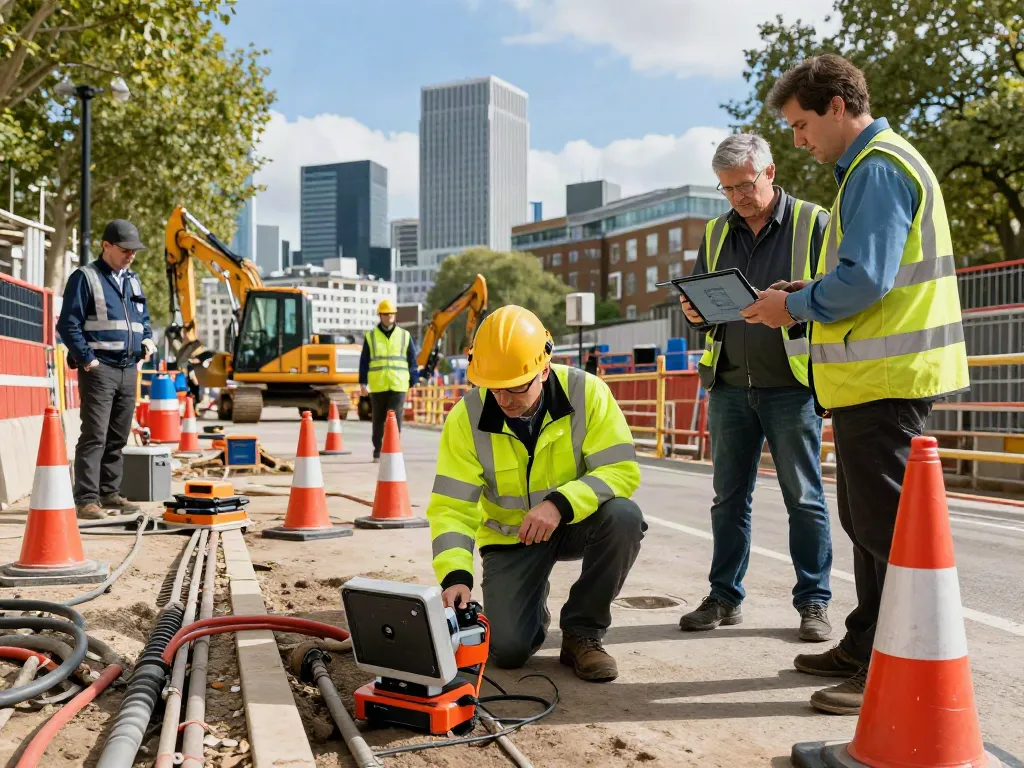
The Role of Utility Surveyors in London
Utility surveyors are essential for the safe and efficient planning of construction projects in London, a city known for its complex network of underground services. These professionals specialise in identifying and mapping buried utilities, which include water, gas, electricity, and telecommunications infrastructure. As urban development accelerates, the demand for reliable utility surveys increases, making the role of utility surveyors critical in minimising risks and ensuring compliance with local regulations. When exploring options, Utility Surveyors London provides comprehensive insights into the available surveying services.
What Utility Surveyors Do
Utility surveyors utilise advanced techniques to locate and map underground utilities accurately. Their work begins with a detailed analysis of existing records, including utility maps and planning documentation. Following this, they conduct field surveys using various technologies, such as Ground Penetrating Radar (GPR) and electromagnetic surveying methods, ensuring precise positioning of utilities.
They gather and interpret data, which helps in preparing comprehensive reports detailing the locations of utilities. This information is vital for civil engineers, architects, and project managers, as it aids in avoiding accidental damage during excavation and construction activities.
Importance of Locating Underground Utilities
The significance of accurately locating underground utilities cannot be overstated. Failing to identify these assets can lead to severe consequences, including:
- Damage to infrastructure, leading to costly repairs.
- Service interruptions, which can affect thousands of residents and businesses.
- Increased construction delays, which can strain project budgets and timelines.
Moreover, regulations governing construction practices make it essential to ensure that all utilities are clearly mapped and identified. Utility surveyors play a pivotal role in maintaining safety and compliance, ultimately safeguarding both workers and the public.
Common Challenges Faced in London
London's unique environment presents several challenges for utility surveyors:
- Dense infrastructure: The city has a highly congested underground network, making it difficult to distinguish between different utilities.
- Inaccurate records: Often, the documentation on existing utilities is outdated or incomplete, necessitating extensive field verification.
- Depth of utilities: With varying depths and materials used for utilities, advanced techniques must be employed to accurately locate them.
Utility surveyors must navigate these challenges expertly, employing innovative technologies to ensure accuracy in their surveys.
Understanding Utility Survey Techniques
Ground Penetrating Radar (GPR) Explained
Ground Penetrating Radar (GPR) is one of the most effective methods used in utility surveying. This non-destructive technique involves sending radar pulses into the ground and analysing the reflected signals to detect buried objects. GPR can provide real-time data, allowing surveyors to visualise the location and depth of utilities quickly.
The benefits of GPR include:
- High accuracy in detecting non-metallic pipes.
- Ability to survey large areas in a relatively short period.
- Minimal disruption to the surrounding environment.
As technology advances, the capabilities of GPR continue to improve, making it an invaluable tool for utility surveyors in London.
Electromagnetic Locating Methods
Electromagnetic locating methods are another mainstay in the utility surveying toolkit. These techniques involve using electromagnetic signals to detect conductive materials, such as metallic pipes and cables. Surveyors typically use a transmitter to induce a signal into the utility, which can then be detected by a receiver above ground.
This technique is particularly effective for:
- Tracing the course of underground power lines.
- Identifying the location of metal pipes.
- Determining the depth of buried utilities.
By combining electromagnetic methods with GPR, surveyors can achieve comprehensive utility mapping.
Best Practices for Efficient Surveys
To maximise the efficiency and accuracy of utility surveys, several best practices should be employed:
- Pre-survey planning: Thoroughly review existing utility records and coordinate with stakeholders to gather as much information as possible before commencing fieldwork.
- Utilise multiple techniques: Employ a combination of GPR, electromagnetic locating, and manual inspection to ensure comprehensive data collection.
- Document findings meticulously: Maintain detailed records of all surveys conducted, including maps and reports for future reference.
Implementing these practices not only enhances survey accuracy but also fosters better collaboration among different project teams.
Benefits of Hiring Professional Utility Surveyors
Reducing Construction Delays and Costs
One of the most significant advantages of hiring professional utility surveyors is their ability to minimise construction delays and associated costs. Accurate utility mapping helps contractors avoid potential pitfalls during excavation, substantially reducing the risk of damaging existing utilities.
By pre-emptively identifying underground infrastructure, teams can schedule work more effectively, ensuring that projects stay on track and within budget. This proactive approach ultimately results in smoother project execution.
Ensuring Safety and Compliance
Safety is a primary concern in construction, and utility surveyors play a critical role in ensuring compliance with health and safety regulations. By accurately mapping utilities, they help prevent hazardous encounters with live services, thus reducing the risk of accidents and injuries on-site.
Compliance with legislative frameworks, such as the Health and Safety at Work Act, is paramount. Proper utility surveys guarantee that all necessary precautions are taken, safeguarding workers and the public alike.
Enhancing Project Planning and Design
Professional utility surveyors provide valuable insights that can enhance project planning and design processes. Their data allows architects and engineers to tailor designs to accommodate existing utilities, resulting in more innovative and efficient solutions.
Moreover, early identification of potential challenges leads to better risk management strategies, ultimately improving project outcomes and stakeholder satisfaction.
Future Trends in Utility Surveying by 2026
Technological Innovations on the Horizon
The utility surveying industry is poised for significant technological advancements in the coming years. Innovations such as artificial intelligence (AI) and machine learning are expected to streamline data analysis processes, allowing surveyors to interpret large datasets more efficiently.
Additionally, the integration of drones equipped with surveying technology promises to enhance aerial assessments of utility networks, providing comprehensive overviews of infrastructure with minimal disruption.
The Impact of Regulations on Surveying Standards
As municipalities increasingly recognise the importance of utility surveying, regulatory frameworks are expected to evolve. Stricter standards may be implemented, mandating more rigorous surveying processes before commencement of construction activities.
Professionals in the industry must stay abreast of these changes to ensure compliance and maintain competitive advantage.
Predicted Industry Changes and Adaptations
The utility surveying landscape will likely undergo significant transformations by 2026. With the growth of smart city initiatives, utility surveyors will need to adapt to the integration of IoT devices and data-driven solutions that enhance infrastructure management.
The demand for skilled professionals in this field will grow, necessitating ongoing education and training to equip surveyors with the expertise required to navigate the rapidly changing technological landscape.
Frequently Asked Questions
What is the average salary for a utility surveyor in the UK?
The average salary for a utility surveyor in the UK varies based on experience, location, and the specific employer. Generally, entry-level positions may start at around £25,000, while experienced surveyors can earn upwards of £45,000 annually.
How much does a home survey typically cost in London?
The cost of a home survey in London can range from £300 to over £1,000, depending on the type of survey required. Utility surveys, which are more complex, might incur additional costs, making it essential to obtain a detailed quotation from service providers.
What is the most accurate way to locate buried utilities?
The most accurate method for locating buried utilities involves using a combination of techniques, such as GPR and electromagnetic locating. By integrating these methods, utility surveyors can achieve high levels of precision and reliability in their surveys.